
Overview of services
In our eye clinic we take enough time for every patient, because we believe that a personal approach is the foundation of quality care. Before each examination we thoroughly discuss the patient’s complaints, symptoms, and any previous diagnoses and treatments. This helps us understand their needs and provide accurate, professional diagnostics.
EXAMINATION FOR PRESCRIBING CORRECTIVE GLASSES
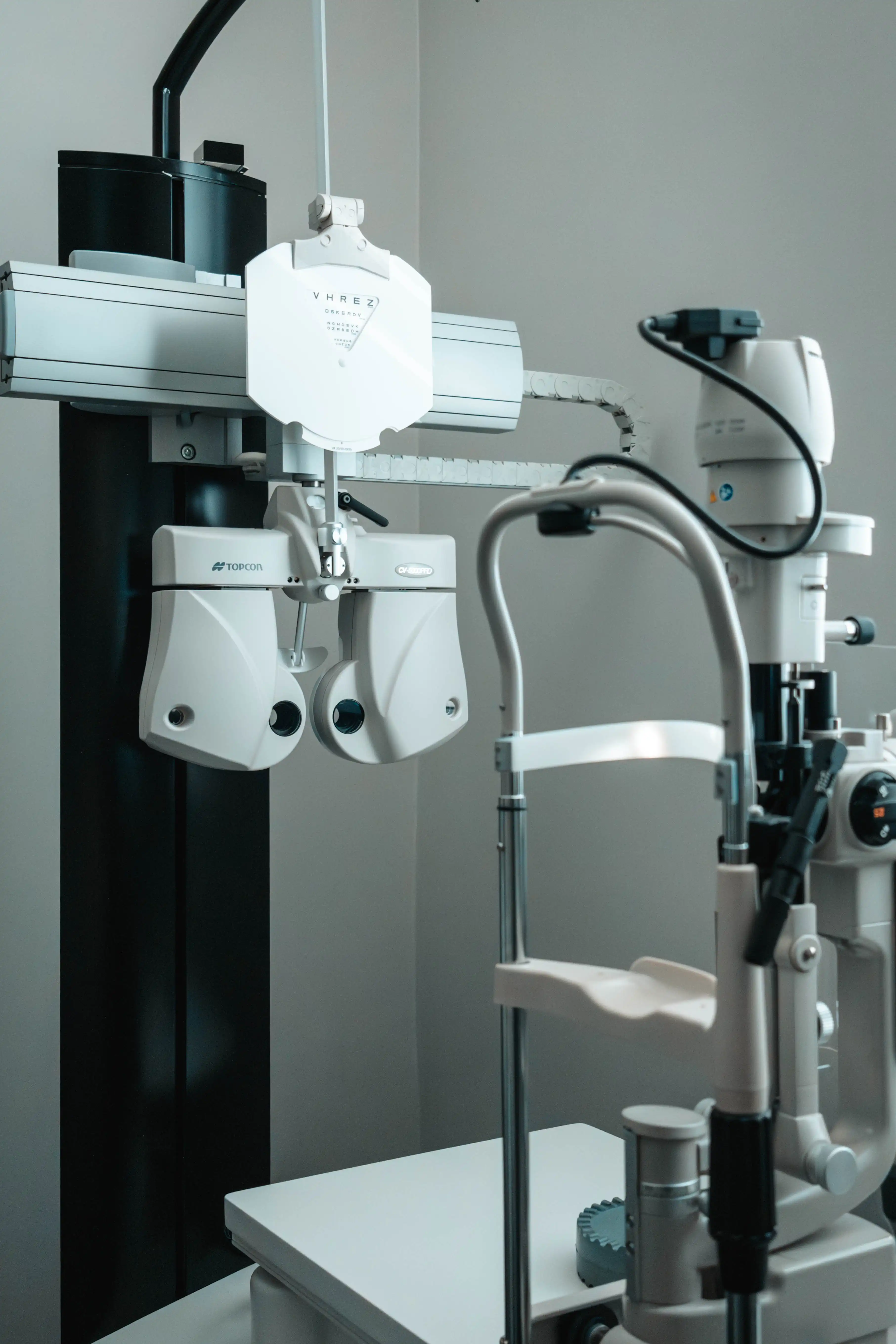
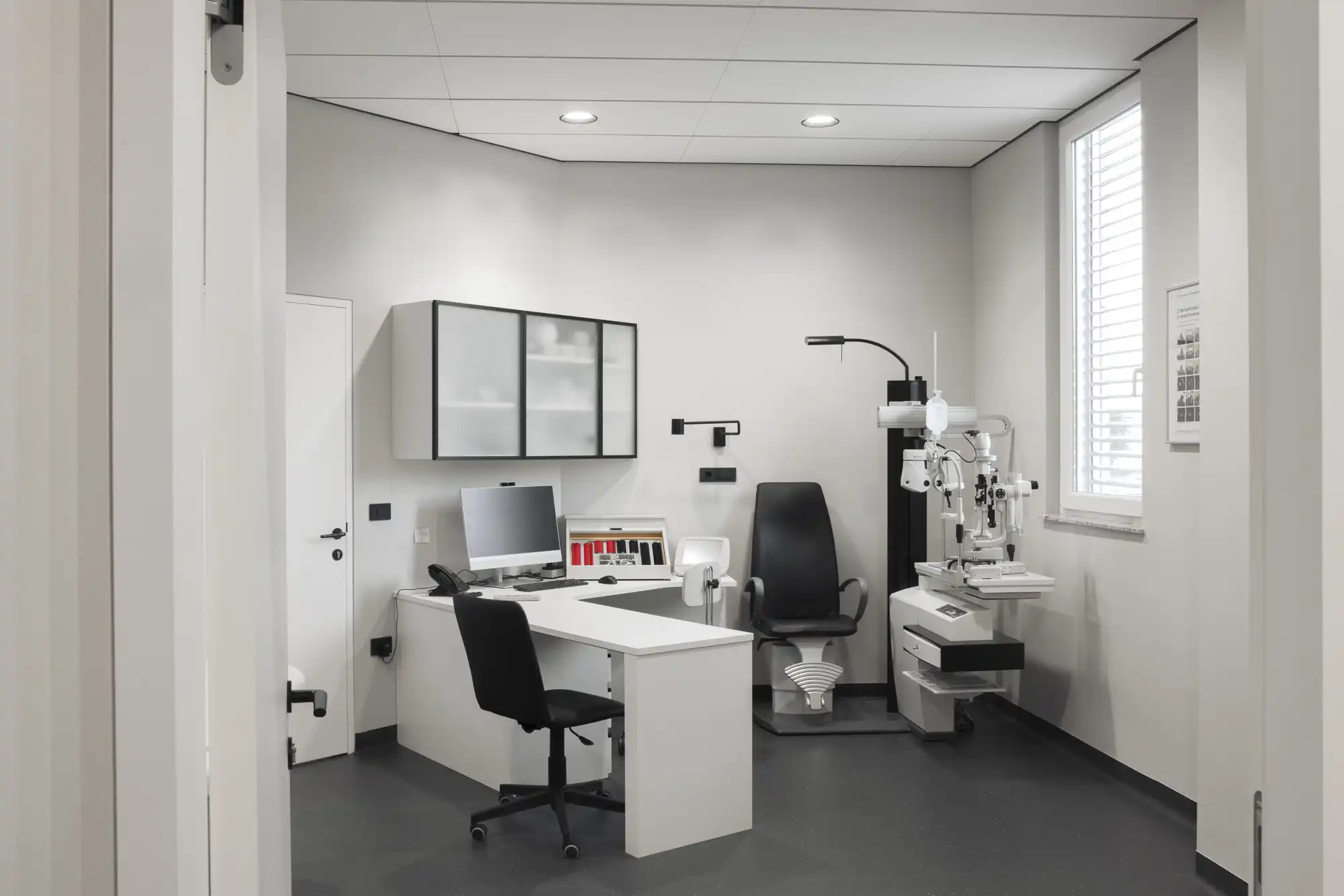
The examination includes a comprehensive vision assessment on modern equipment and covers:
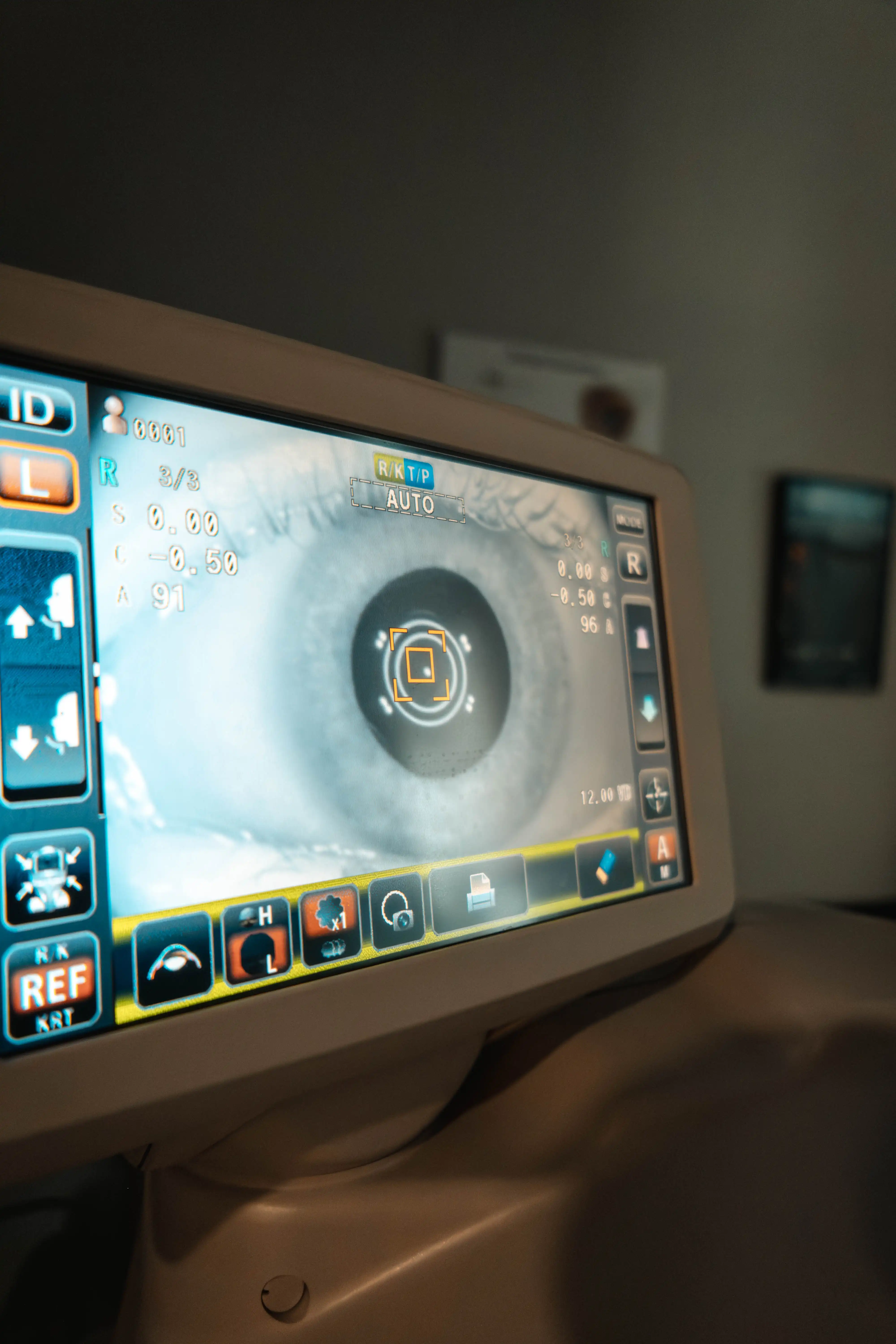
- refraction (measuring dioptres) — determining the prescription for glasses that provides optimal visual acuity,
- measuring intraocular pressure,
- examination of the anterior segment,
- examination of the fundus with a narrow pupil.
EXAMINATION BEFORE FIRST USE OF CONTACT LENSES
The contact lens examination includes:
- refraction (measuring dioptres),
- measuring corneal base curve,
- tear film assessment,
- measuring intraocular pressure.
Based on the measurements we determine whether contact lenses are a suitable option for your eyes. Depending on your prescription, tear film, corneal curvature, and intended wearing pattern, the doctor selects the most appropriate lenses for you.
This is followed by lens instruction, where we teach you how to use contact lenses correctly. The doctor also checks visual acuity with the lenses in place. The full examination with instruction takes about 1.5 hours.
DRIVER'S LICENCE RENEWAL
Our eye clinic provides all ophthalmological examinations required to obtain or renew category B, C, and E driving licences.
For candidates applying for or renewing a licence, this service assesses whether visual function meets the required standard.
After the ophthalmological examination we issue a report that you submit to the occupational, traffic, and sports medicine physician.
GLAUCOMA EXAMINATION
What a glaucoma examination includes:
- assessment of optic nerve function (visual acuity, visual field testing),
- measuring intraocular pressure,
- examination of ocular structures, including the angle and optic nerve,
- OCT imaging of the optic nerve head to assess nerve fibre thickness,
- comparison with normal values,
- comparison with your previous results (if available).
OCT imaging is important for documenting the condition of the optic nerve at the examination, as it helps us assess possible progression of the disease.
RETINAL DISEASE DIAGNOSTICS
Our doctors are also trained in diagnosing and treating a wide range of non-surgical retinal conditions, such as:
- vascular retinal diseases (e.g. retinal vein occlusions),
- age-related macular degeneration,
- diabetic retinopathy,
- other retinal microangiopathies.
CHILDREN'S VISION EXAMINATION
We provide comprehensive eye examinations for preschool and school-age children in a calm, welcoming environment where we take enough time for the child to feel safe and relaxed. The examination includes discussion of any vision concerns, assessment of visual acuity, and a detailed examination of ocular structures. An important part is refraction, which in children (up to about age 14, or older at the doctor’s discretion) differs significantly from adult refraction. Children have a strong ciliary muscle, which can cause large fluctuations in measured dioptres compared with adults. To avoid errors, after visual acuity assessment the child receives eye drops that temporarily relax this muscle. After the drops, near vision may be blurred and the child may be more sensitive to light; reading and writing can be more difficult. For most children vision gradually improves within 24 hours, though mild blurring may last longer. We therefore recommend lighter school obligations on the day of the examination and, if needed, the following day. A full examination usually lasts about an hour and a half.
OCT SCAN
OCT is a fast, accurate, and painless imaging method that uses a light scanner to examine retinal structures and the optic nerve.